
Clark County Court Docket Searches
Most Clark County case summaries start with Wisconsin Circuit Court Access, or WCCA. It covers state trial-court records. City ordinance matters are not all included. A full case number is your best key for a docket search. If you only have a name, narrow it down. Add Clark County, a likely case class, and a filing-date range, since a bare name often pulls up unrelated people. Before trusting a match, check a few things. The county, caption, filing date, and party role should all line up with what you know.
When the portal leaves you stuck, go to the counter. Other routes exist too. You can call or write the Clerk of Courts, use a WCCA terminal at the courthouse, or file electronically when your role permits it. Each channel does a different job. WCCA finds public case information, the clerk inspects and certifies the official file, and eFiling shows documents your account is cleared to view.
- Read the citation, summons, or order and identify the court named on it.
- Open WCCA for a circuit matter and select Clark County, or search statewide if the filing county is uncertain.
- Enter the exact case number when known. Otherwise use the name plus class and date filters.
- Check the caption, case type, branch, events, and disposition in the public summary.
- Ask the Clerk of Courts for inspection or a certified copy when the public summary is not enough.
The official Clark County Circuit Court page lists the local links for case searches, traffic matters, small claims, records, and general court information.
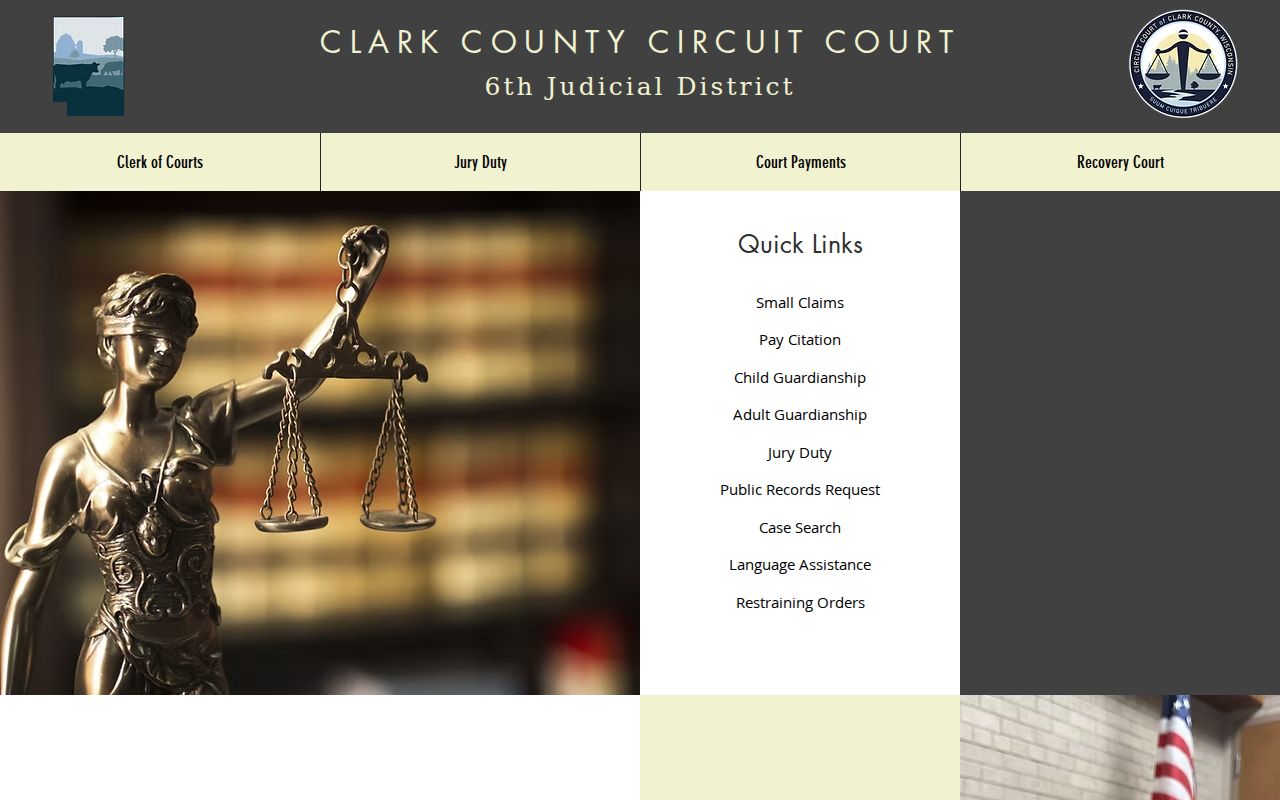
Those local links point you to the office or the process behind each docket entry, which WCCA alone does not explain.
WCCA Fields for Clark Dockets
WCCA spans the whole state, but setting the county control makes a Clark County docket search far sharper. Type the full Wisconsin identifier into the case-number field. Public materials also describe controls for party name, county, case status, case class, and filing date. Field labels shift over time. The search screen itself is the authority. Whatever labels appear on the day you look are the ones that count.
| Search field | Best use | Clark County caution |
|---|---|---|
| Case number | Exact known court case | Keep every letter, digit, and separator |
| County | Narrow a name result | Choose Clark only for a Clark circuit case |
| Party name | Search when no number is known | Confirm identity from the case context |
| Class or type | Separate CF, CV, SC, TR, and other files | A code guides the search but does not prove an outcome |
| Filing date | Limit older or common-name results | It is not the incident or hearing date |
The Wisconsin case-search gateway splits WCCA circuit cases from WSCCA appellate cases. That division keeps a court appeal from being confused with a fresh Clark County trial docket.
Court Dockets: What They Show
Think of a Clark County court docket as a timeline of public case information. Wisconsin sources often use the terms case summary or court record for the same thing. It names the parties and their roles, the assigned branch, filings, appearances, orders, settings, judgments, and the stated disposition. Each entry is a procedural marker, nothing more. It does not prove an allegation true. The document behind an event may not even appear.
| Case number | The court identifier and strongest search key, often including a class such as CF, CV, or TR. |
|---|---|
| Caption and parties | The case title and each person or entity's court role. |
| Filing date | When the action was opened, which can differ from an incident or service date. |
| Events | Filings, service, appearances, motions, orders, payments, and other recorded steps. |
| Setting | A date, time, branch, and event type when those details are publicly displayed. |
| Disposition | The court's outcome or status language, which should be read exactly as entered. |
Three Clark County Docket Layers
One case number can open three distinct layers of court records. WCCA gives the public case-information summary. Wisconsin eCourts eFiling can show documents to an authorized participant, subject to processing and access limits. The Clark County Clerk of Courts keeps the official file. It also issues regular or certified copies. Note a quirk in eFiling. A document name shown in black may be restricted from that account. The event still appears on the record.
The Wisconsin circuit-court eFiling system does not replace WCCA. Attorneys and high-volume filers use it in covered cases, and a self-represented party may opt in under current rules. It can filter My Cases by county and case number, with View documents and View parties controls. Just want a public docket search? Stick with WCCA and the clerk. There is no need to open an eFiling account. The account gate sits above the role-based filing functions. A basic Clark County docket summary still lives on WCCA.
Clark County Courts and Their Dockets
Clark County Circuit Court is the general-jurisdiction state trial court for the area. It runs Branch 1 and Branch 2 at the courthouse in Neillsville. The state directory puts Clark in Wisconsin's Seventh Judicial District. Municipal courts are separate local courts entirely. The named local example is the Abbotsford-Colby Municipal Court. It handles qualifying city ordinance and traffic citations from Colby-Abbotsford Police. A sheriff or State Patrol citation is different. It may point to circuit court instead.
| Court or system | Typical docket | Official access route |
|---|---|---|
| Clark County Circuit Court | Criminal, civil, family, small claims, probate, state or county traffic | WCCA and Clerk of Courts |
| Abbotsford-Colby Municipal Court | Qualifying city ordinance and police citations | Citation and municipal court clerk |
| Wisconsin Court of Appeals and Supreme Court | Appeals from state circuit cases | WSCCA |
| Western District of Wisconsin | Federal civil and criminal cases | PACER and CM/ECF |
The official Clark County website is the county gateway to courthouse and department records.
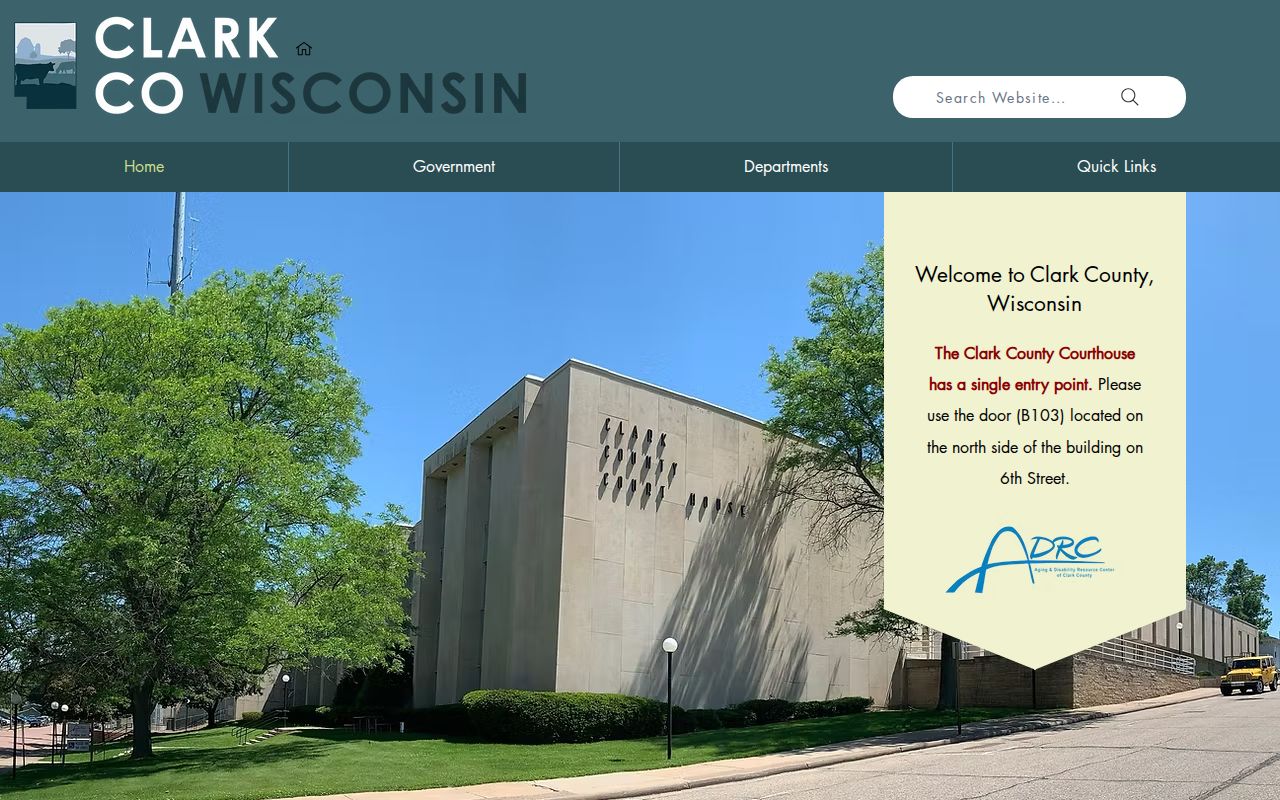
The county gateway helps you separate court records from sheriff, deeds, and other county records kept by different offices. Federal and appellate case numbers will not swap for a Clark County circuit number. After an appeal creates a WSCCA record, the original circuit file still stays with the county clerk.
Clark Docket District Label Conflict
A small labeling conflict is worth knowing about. The county circuit page shows a “6th Judicial District” label, while the official Wisconsin circuit-court directory lists Clark County in the Seventh Judicial District. The state directory controls on hierarchy. The mismatch matters when you are confirming a judge, branch, or regional assignment.
Practical point: use the branch and judge shown in the current case record. A district label on an older local page should not override the live docket or state directory.
The Clark County Circuit Court page is still valuable for local contacts and filing links. Use each page for what it does best. When they disagree, let the more authoritative court record settle it.
Court Dates and Settings in Clark County
Clark County posts no standalone daily court calendar. So build from what you hold: the citation, summons, or order. Check the WCCA events next. Then call the clerk when a date is missing or may have moved. Authorized eFiling users have another option. They can pull notices and case details from their account. Judge-specific scheduling questions may need the judicial assistant in the state directory.
Read event names closely. A traffic citation date is an initial appearance, not necessarily a trial. A small-claims return date is a required appearance set through the clerk's process. Clark local rules also describe telephonic civil scheduling conferences and allow phone proceedings when permitted. The full walkthrough covers the Clark County court schedule. It shows how to tell these settings apart and confirm resets.
Note: a cached page or old listing cannot confirm a current hearing. The court may continue, reset, or cancel an event.
Clark County Docket Caseload
The 2024 circuit report gives a sense of scale behind any Clark County docket search. Treat its categories as administrative workload rows rather than counts of unique people. Criminal matters came to 297 opened and 315 disposed. Forfeitures ran far heavier, at 1,667 opened and 1,711 disposed. Civil and family rows together total 435 opened and 440 disposed. Probate shows 80 opened and 86 disposed. Other rows shape the full table too. These include transfers, reopened matters, reactivations, and deactivations.
Numbers like these explain why filters help. They still cannot predict the time or the outcome of one case. Municipal activity sits outside this circuit report entirely. Abbotsford Municipal Court reported 389 cases in 2019, 375 in 2020, and 366 in 2021. The state warns that municipal figures are locally reported. They are not authenticated in every detail.
Docket Access Under Wisconsin Law
Wisconsin law favors inspection and copying of public records. That baseline does not put every filing on the internet, though. Court rules and statutes guard confidential case types. They also protect sealed material and personal identifiers. So a public Clark County docket may show a case-level event while withholding a document or trimming its details. Ask the clerk what portion is open. The clerk can describe the limits but cannot give legal advice about changing a restriction.
Key Wisconsin rules:
Wis. Stat. §19.35 establishes inspection and copying rights subject to exceptions and legal balancing.
Wis. Stat. §801.19 protects Social Security and driver-license numbers in court filings.
Wis. Stat. §801.20 identifies confidential court-record categories.
Wis. Stat. §801.21 provides the procedure for sealing or redacting records.
Juvenile, child-protection, mental-health, and some family or probate material can face stronger limits. When a search returns nothing, the case is not publicly displayed in the system searched. That is not proof no case ever existed.
Older Clark County Docket Files
Clark County's current courthouse is the county's third. The complex opened in 1966 and gained an east addition in 1978. That building history matters for docket research. An older case may sit on paper, microfilm, or in an archive, or it may have reached a destruction date under Supreme Court Rule Chapter 72. An empty online search cannot settle that records-management question. The county facility page documents the courthouse history along with entrances, parking, maps, and the accessibility route.
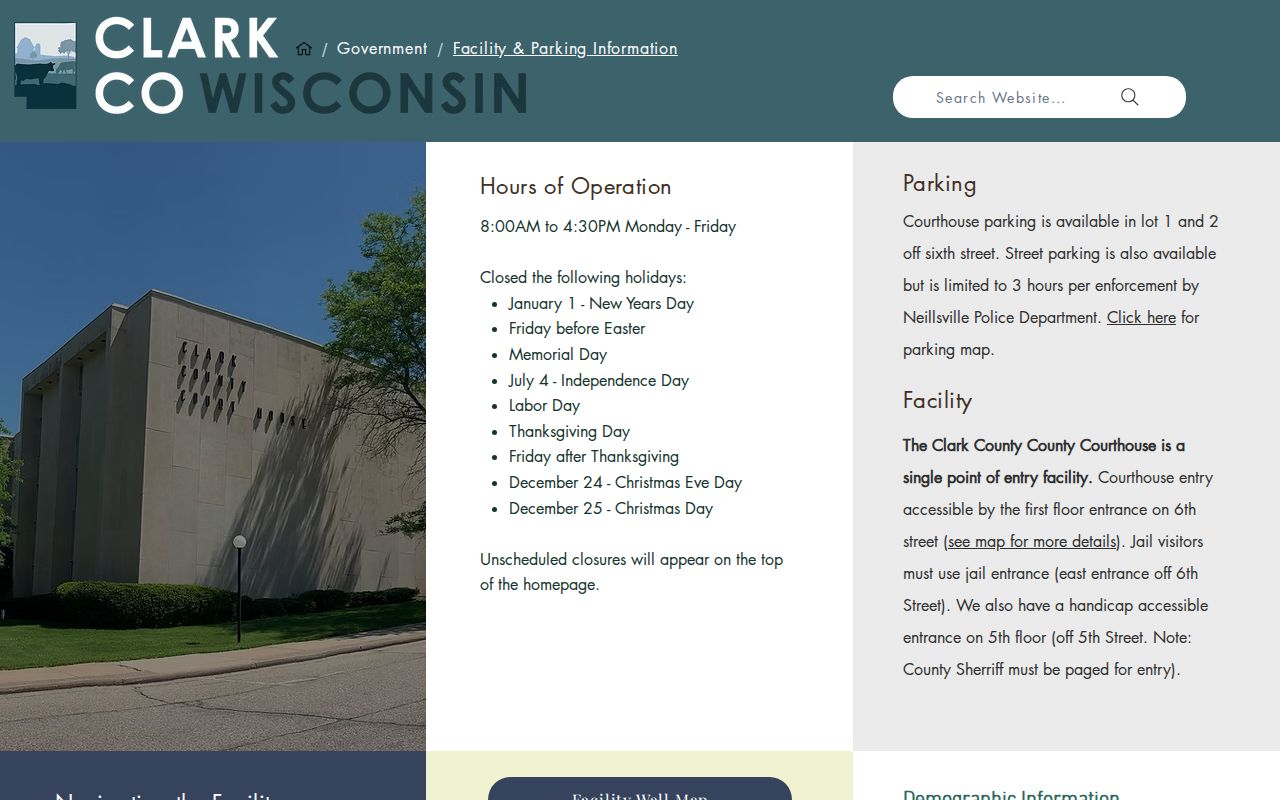
For archived files, the physical courthouse still answers what a search screen cannot. A strong request names the approximate year. It gives the case type, the names as known, and the exact document sought. Say whether you need a plain or certified copy. Chapter 72 sets different schedules by record type, with separate treatment for civil, traffic, juvenile, confidential, and expunged records.
How the Clerk Keeps Docket Records
Heather Bravener, Clark County Clerk of Courts, keeps the written record for ordinary circuit-court proceedings. The office creates and maintains that record. It also preserves and disposes of it. Its listed responsibilities cover appeals, civil, criminal, family, forfeiture, small-claims, and traffic files. Do not confuse it with the separately elected County Clerk. That office runs county administration. It is not another trial-court docket clerk. Municipal clerks keep their own municipal files.
Request copies at the counter or by contacting the office. Give the case number whenever you can. Give the exact filing too. Without a case number, the current statewide fee chart lists a $5 search for one action. Regular clerk copies run $1.25 per page, and certification adds $5 plus the per-page charge. Confirm the current amount and public status before sending payment. The official Clerk of Courts page identifies the office and its record role.
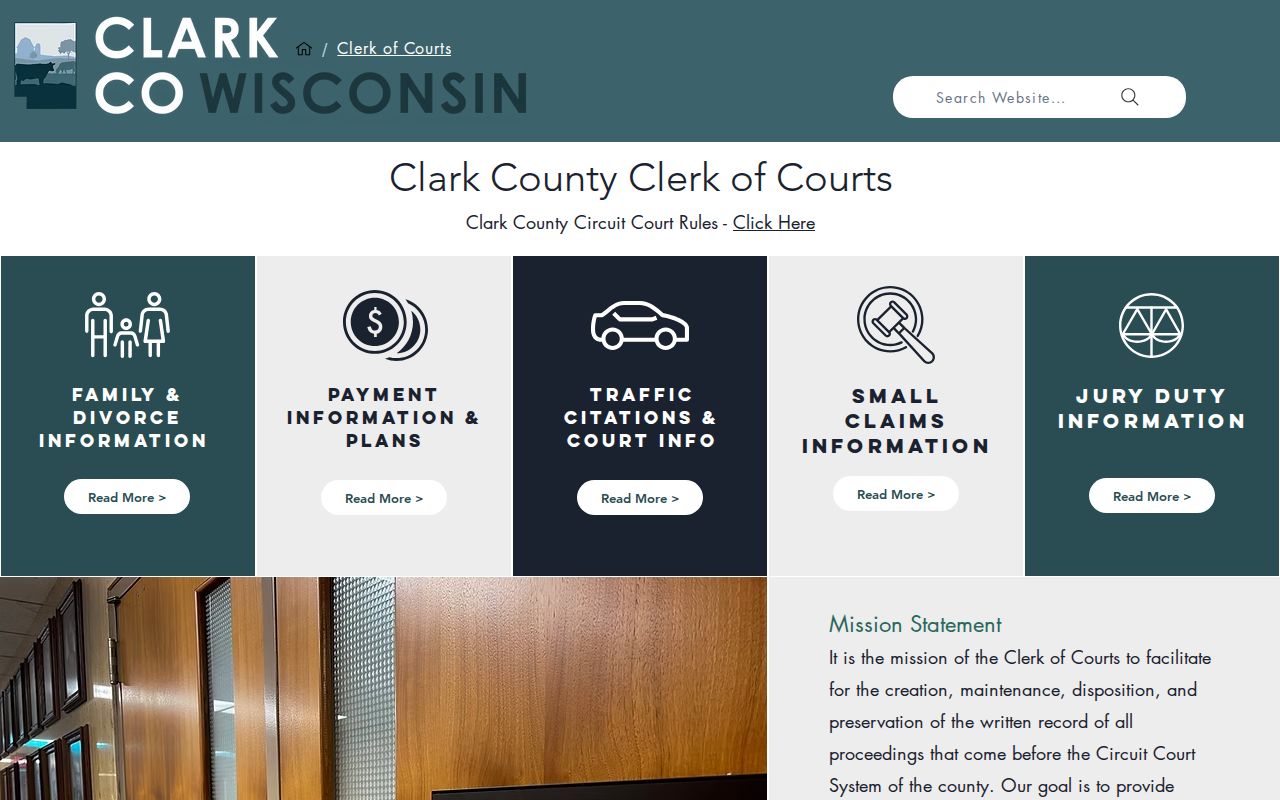
That office listing is the direct source for current contact details. It also carries any change to the Clark County docket request route.
Clark County Clerk of Courts
Room 405, Clark County Courthouse
517 Court Street
Neillsville, WI 54456
715-743-5181 or 715-743-5183
Clark County Docket Fax Limits
Clark Local Rule 301 treats fax as a narrow channel, not a broad substitute for eFiling. It permits specified no-fee items. Those include some nonmandatory traffic or forfeiture not-guilty pleas. Payment plans, certain health reports, and a copy request of one page or less also qualify. The sender bears responsibility for receipt. Everything else follows the clerk and eFiling procedures for its case type.
Local Rule 302 adds that filings go to the Clerk of Courts, not straight to a judge or another county office. A motion may need a courtesy copy for the judge, yet that courtesy copy never replaces filing the original through the correct channel. These habits keep a Clark County docket current. They also keep documents out of offices that cannot enter them. Confirm receipt of any allowed fax with the clerk. Sending a page does not prove it reached the court record.
City-by-City Court Dockets in Clark County
Ranked by the 2020 population column in the county's 2024 economic profile, these are Clark County's five cities. Population, though, has nothing to do with venue. The citation itself names the court that hears it. Neillsville hosts the circuit court. Abbotsford and Colby share a municipal court that handles qualifying city citations. Thorp and Loyal post no separate public municipal docket portal, so a Clark County court docket search for those cities runs through the county or the named agency instead. Start with the issuing agency named on the ticket. Then match it to the correct court before anything else.
Neillsville Court Records
2,384 in 2020. County-seat circuit access plus separate city ordinance routes.
Thorp Court Records
1,795 in 2020. Use the citation to choose city or circuit access.
Abbotsford Court Records
1,665 in 2020. Home of the joint Abbotsford-Colby Municipal Court.
Colby Court Records
1,275 in 2020. Joint municipal sessions are held in Abbotsford.
Loyal Court Records
1,203 in 2020. WCCA or the issuing municipal clerk supplies the route.
Missing Clark County Docket Results
A docket search that comes up empty rarely means the case is gone. Start with the small stuff. Check the spelling of the name, any former names, the county, the case class, and your date range. Then ask a bigger question: is this a municipal, appellate, or federal matter? A Clark County court docket will not hold a case that belongs to another system. Juvenile files, sealed records, expunged cases, and confidential or offline material can also stay out of view. An eFiled document may still be processing or restricted even though the docket event exists. Each cause points to its own official source. Work down a fallback chain. Use the citation or court order first. If venue is unclear, run a statewide WCCA search. WSCCA covers appeals, and PACER handles federal matters. A municipal citation belongs to the named municipal clerk. When all else fails, give the Clark County Clerk of Courts the case number, or an approximate year and class. That chain beats repeating a name search, and it beats paying a commercial instant-record service.
- Continued or reset
- The event moved; the earlier entry may stay in the history.
- Restricted
- The case or document has an access limit, which does not mean it never existed.
- Disposition
- The outcome or status recorded by the court, read in the exact language shown.
- Certified copy
- A copy authenticated by the custodian, not a printout of the public summary.
Map and Directions to the Clark County Courthouse
Circuit Court Branch 1 and Branch 2 files are kept at the Clark County Courthouse, 517 Court Street, in Neillsville, the county seat. The Clerk of Courts counter is on the fourth floor, Room 405. The current building is the county's third courthouse; the complex opened in 1966 with a 1978 east addition, and floor maps for the first through fifth floors are posted inside.
Clark County Clerk of Courts
Room 405, Clark County Courthouse
517 Court Street
Neillsville, WI 54456
715-743-5181 or 715-743-5183
Monday through Friday, 8:00 a.m. to 4:30 p.m.
The public entrance is on the north/6th Street side, door B103, with controlled access/screening; visitor parking is in Lots 1 and 2 off Sixth Street, and street parking is limited to three hours and enforced by Neillsville Police. A handicap entrance is on the fifth-floor side off Fifth Street, where the Sheriff must be paged for entry, so calling ahead to confirm current access is worthwhile.